
Loading...
Three years ago I placed my first pitcher strikeout prop on a random Tuesday night game — a modest Over 5.5 Ks on a lefty facing a lineup that could not lay off sliders low and away. The bet landed in the fifth inning and I was hooked. Since then, prop bets have become the single most interesting corner of my MLB betting routine, and I am convinced they are the most misunderstood market among UK bettors who are only just discovering baseball.
The reason is simple: most British punters arrive at MLB via moneyline or run line, which is natural given the football-style “pick a winner” instinct. Props flip that logic entirely. You are not betting on who wins the game — you are betting on individual performances inside the game. A pitcher’s strikeout count. A batter’s total bases. Whether anyone clears the fence for a home run. Once you understand how these markets are priced and where the value hides, they become a toolkit that complements your main bets rather than replacing them.
This guide breaks down the prop types you will encounter at UKGC-licensed bookmakers, then drills into the three markets that matter most: strikeout props, home run props and total bases. I will show you how to read the lines, where to look for edges and how to avoid the traps that catch newcomers. If you want a broader view of MLB betting in the UK, start there — then come back here when you are ready to go deeper.
Types of MLB Prop Bets and How UK Bookmakers List Them
I remember the first time I opened the MLB prop menu at a UK sportsbook and felt like I was reading a restaurant menu in a foreign language. There were pitcher props, batter props, team props, game props and something called “anytime home run” that sounded more like a lottery than a bet. Let me map it out for you so you do not waste twenty minutes scrolling past markets you do not need.
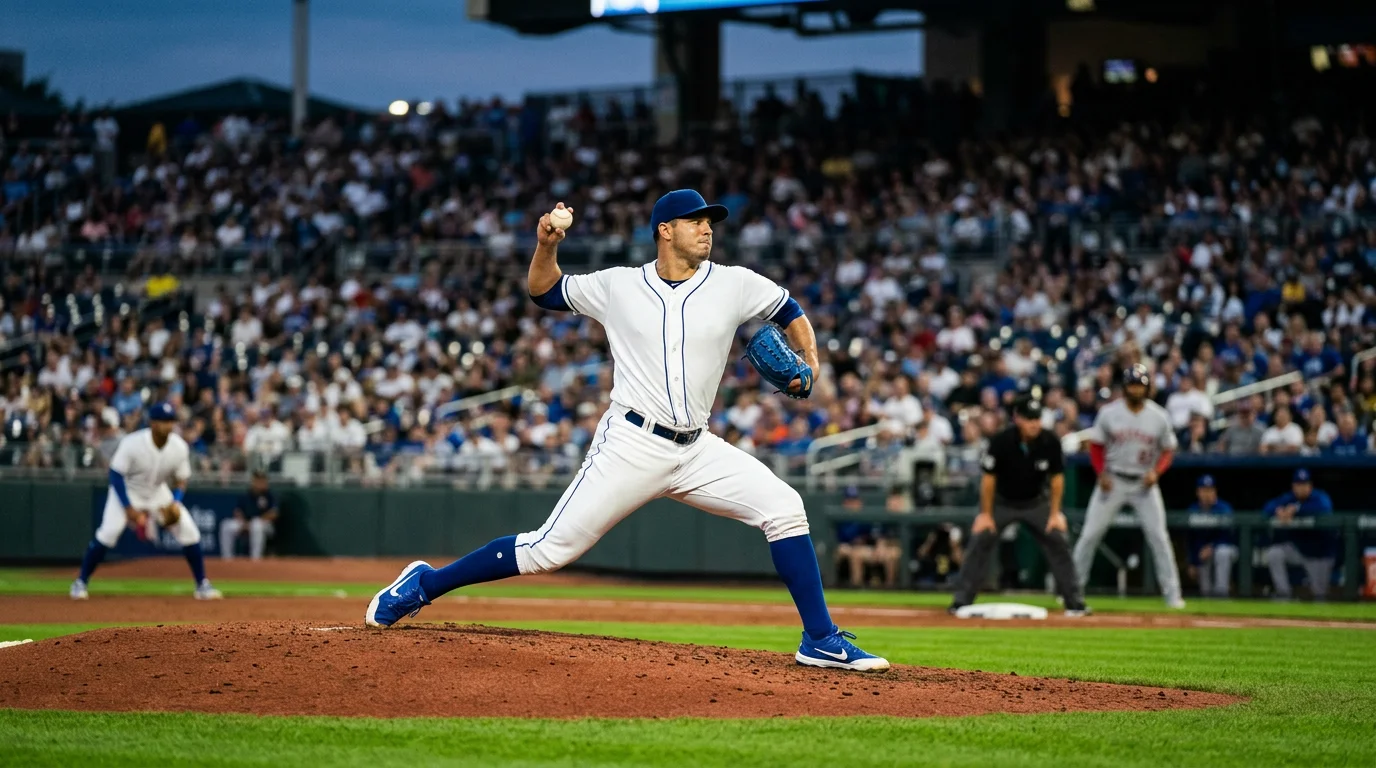
Pitcher props revolve around a starter’s performance: strikeout totals (Over/Under a line, say 6.5), hits allowed, earned runs allowed, outs recorded and occasionally wins. Of these, strikeout totals carry the most liquidity at UK books and are the easiest to handicap. Batter props focus on individual offensive output: hits, total bases, home runs, runs scored, RBIs and stolen bases. Team props zoom out slightly — things like team total runs, first team to score, or whether both teams will score.
Game-level props include first inning result, will there be a grand slam, total runs odd or even, and similar novelty markets. These tend to have wider margins and are harder to model, so I treat them as entertainment rather than serious value plays. The markets that reward homework are pitcher strikeouts, batter total bases and home runs — which is why the rest of this article is built around those three.
UK bookmakers generally price prop bets in decimal odds with a line (the number you are betting over or under). Some list them under “Player Specials” or “Player Performance Markets” rather than a dedicated “Props” tab. If you cannot find props on your bookmaker’s app, search for the specific game first, then look for a tab labelled something like “Player Markets” or “Alternatives”. The naming is not standardised, but the product underneath is.
One structural quirk worth knowing: most UK books settle props on the player’s statistical performance for the entire game, not just the innings they pitch or bat in. If a starting pitcher is pulled after four innings with five strikeouts, those five are the final tally for that prop. The bullpen’s work does not count toward the starter’s strikeout line. This matters enormously — more on that below.
Pitcher Strikeout Props: Reading Lines, Finding Edges
A game last summer changed how I approach K props permanently. I backed a starter whose strikeout line was set at 5.5, knowing he averaged 7.3 K/9 over the season. The line felt generous. Then I checked his recent game logs — he had been pulled before the sixth inning in three of his last four starts because his pitch count was running high. He struck out five in 4.2 innings and the bet lost by half a strikeout. The lesson: a pitcher’s talent for missing bats is only half the equation. How deep he goes into the game is the other half.
When you see a line like “Over/Under 6.5 strikeouts” on a starting pitcher, the bookmaker is pricing two things simultaneously: the pitcher’s strikeout rate and how many innings they are likely to throw. A pitcher with a stellar K/9 of 10.0 who averages only five innings per start will strike out fewer batters in total than a pitcher with a K/9 of 8.5 who routinely throws seven innings. This is the single most common mistake I see in K props — bettors look at the rate and ignore the workload.
To find genuine value, you need three data points. First, the pitcher’s K/9 rate — strikeouts per nine innings. This tells you how often he misses bats relative to his workload. Second, the average number of innings pitched per start in recent outings, not season-long. Managers manage workloads differently in April versus September and especially around doubleheaders. Third, the opposing lineup’s strikeout rate against the pitcher’s handedness. A right-handed starter facing a lineup that strikes out 26% of the time against righties is more likely to exceed his K line than the same pitcher facing a lineup that only strikes out 19%.
Combine these into a rough expected K total. If a pitcher’s K/9 is 9.0 and he averages 5.8 innings per start, his expected strikeouts per game sit around 5.8. Against a high-K lineup, push that toward 6.5; against a contact-heavy lineup, drop it to 5.2 or so. Compare your number to the bookmaker’s line. If the line is 5.5 and your model says 6.5, you have an Over with daylight. If your number is 5.6 and the line is 6.5, the Under is the play.
One more factor: day games versus night games. Some pitchers’ spin rates and velocity dip in afternoon heat, which can reduce swing-and-miss rates. It is a small edge, but small edges compound over a 162-game season where you might bet K props four or five times a week.
Home Run Props: Anytime HR and First HR Markets
Nothing in baseball betting triggers more recreational action than the home run prop. “Will Player X hit a home run?” Yes or no. It feels simple, almost binary, which is exactly why bookmakers love offering it — the margins are wide and the public bets the Over disproportionately because everyone wants to cheer for a ball leaving the park.
The “Anytime Home Run” market asks whether a specific batter will hit at least one home run during the game. The odds are typically in the 3.00 to 7.00 range depending on the batter’s power profile. A slugger who launches 35-plus homers a season might be priced around 3.25 to go yard on a given night; a utility infielder might sit at 9.00 or higher. The implied probability for most mid-tier power hitters lands between 12% and 18%, meaning this is a market where you are wrong far more often than you are right — but the payouts compensate.
The edge in home run props comes from ballpark and pitching matchup analysis rather than raw power numbers. A hitter facing a pitcher who gives up a high fly-ball rate in a stadium with a short porch to the pull side has a materially higher probability than his season average suggests. Conversely, the same hitter at a cavernous park like Oracle in San Francisco might see his actual probability drop well below the implied price. Bookmakers set HR prop lines based heavily on season-long rates, so if you can identify matchup-specific bumps, you can find value that the line does not reflect.
First Home Run is a smaller market that asks whether a specific player will hit the first homer of the game. The odds are much longer — often 11.00 to 20.00 — because you need both the HR event and the sequence to align. I generally avoid this market unless I have a strong view on the first few innings and a specific batter’s history against the opposing starter. It is a fun sprinkle, not a strategy anchor.
Total Bases Props: The Market That Rewards Homework
If strikeout props are my bread and butter, total bases props are the side dish that quietly generates the most consistent returns. A total bases prop asks how many bases a batter will accumulate through hits: a single counts as one, a double as two, a triple as three and a home run as four. Walks do not count. Neither do hit-by-pitches or fielder’s choices.
The lines usually sit between 1.5 and 2.5 for everyday hitters. Going Over 1.5 total bases means the batter needs at least a double, or two singles, or any extra-base hit. Going Over 0.5 simply means the batter needs at least one hit of any kind. The pricing reflects this: Over 0.5 is typically short (1.55 to 1.75 range) while Over 1.5 stretches to 1.80 to 2.20 depending on the matchup.
Where total bases props shine is in their sensitivity to pitching matchups. A batter who mashes left-handed pitching will have a different true total-base expectation against a lefty starter than the blanket line suggests. Bookmakers do adjust for this, but not aggressively enough in my experience — especially for platoon hitters who crush one handedness and struggle against the other. Check the batter’s splits against LHP/RHP, then compare to the posted line. The gaps are often wider than you would expect.
Another angle: the lineup position. Batters hitting third, fourth and fifth in the order get more plate appearances per game on average, which directly increases their total-base ceiling. A slugger moved from fifth to third in the lineup might face one additional at-bat per game, and if the bookmaker priced the line based on his recent averages in the five-hole, the Over gains a hidden edge from the lineup shuffle.
For a deeper framework on how I evaluate pitching matchups and apply them to an overall MLB betting strategy, the strategy guide covers the system in detail.