
 Available in US
I once bet the Under on an MLB All-Star Game total, reasoning that two squads of elite pitchers would keep the scoring low. The American League won 8-6. Fourteen runs in an exhibition game featuring the best arms in baseball. That night taught me that the All-Star Game operates under its own logic, and applying regular-season handicapping frameworks to it is a reliable path to disappointment.
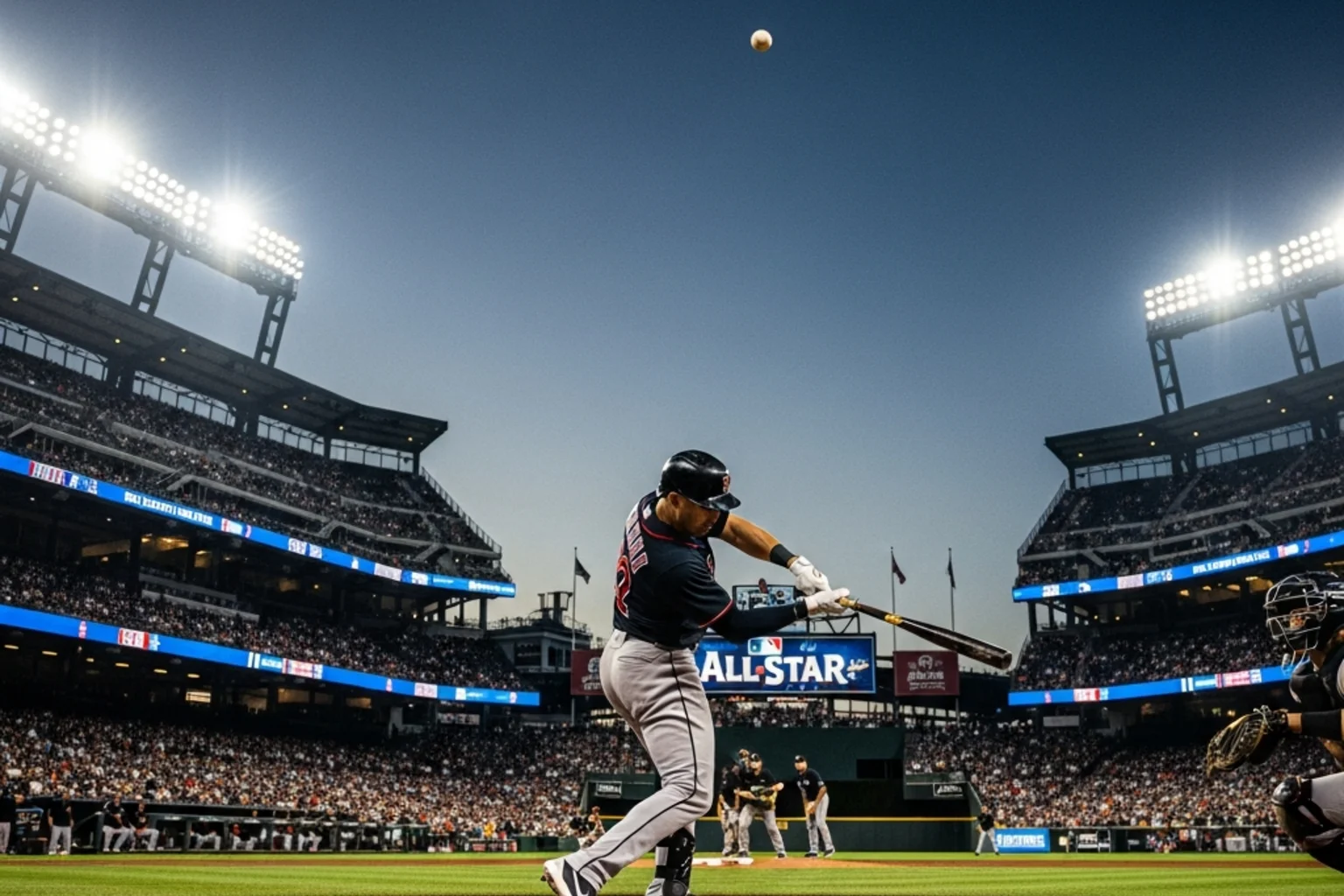
The MLB All-Star Game is a mid-season exhibition held every July, pitting the best players from the American League against the best from the National League. Unlike league matches in football, the result carries no competitive consequence — no points, no standings implications, no postseason advantage. It exists purely for entertainment, which changes the dynamics of player effort, managerial decisions and, crucially, how the game should be bet.
For UK bettors, the All-Star break represents both an event worth betting on and a natural pause in the daily grind of the regular season. The Home Run Derby on the night before the game is often the more exciting betting product. Here is how both work.
Exhibition Betting Markets for the All-Star Game
UK bookmakers offer a surprisingly full menu for the All-Star Game given its exhibition status. The standard offerings include moneyline (which league wins), game total (Over/Under combined runs), first team to score, inning-by-inning betting and a selection of player props.
The moneyline is the simplest market but also the hardest to handicap. Roster construction for the All-Star Game is partly fan-voted, partly player-selected and partly manager’s choice, which means the lineups are not optimised for winning. A manager might start a popular veteran over a statistically superior player because the exhibition format rewards spectacle over strategy. Pitchers throw one or two innings at most, so starting pitcher analysis — the foundation of regular-season handicapping — is nearly irrelevant.
Totals are volatile for the same reason. Early innings feature elite starters throwing at full effort for a short stretch, which suppresses scoring. Middle innings bring in relievers who may be facing unfamiliar hitters in a low-pressure context, which can produce sloppy at-bats and crooked numbers in either direction. Late innings are the wildest, as position players sometimes pitch in blowouts and both managers empty their benches. The total on an All-Star Game is essentially a coin flip dressed up in star power.
Player props offer the most interesting angles. A Home Run prop on a slugger who is swinging well at the break can be evaluated on recent form and the specific ballpark’s dimensions. A strikeout prop on a pitcher who is starting the game and will face three to six batters is a very short-sample bet, but if you know the pitcher’s matchup history against those specific hitters, you have data that the bookmaker’s blanket pricing may not reflect.
Home Run Derby Betting: The Better Product
If the All-Star Game is an exhibition with pretensions of competition, the Home Run Derby is pure spectacle with a bracket structure that actually lends itself to betting. Eight sluggers compete in a single-elimination tournament, each getting three minutes to hit as many home runs as possible. The bracket is seeded, matchups are known in advance, and the outcome hinges on a skill — raw power — that is relatively measurable.
Derby markets at UK bookmakers typically include outright winner, head-to-head matchup bets for each round, most home runs in a single round, total home runs across the event, and whether the total will exceed a specified number. The outright winner market is the headline product, with prices ranging from 3.00 for the favourite to 12.00 or longer for the underdogs.
The edge in Derby betting comes from understanding that raw power is not the only variable. The Derby format rewards bat speed and swing tempo more than regular-game power, because the three-minute clock means hitters need to maintain a rapid pace. A player who hits monster home runs but has a slow, deliberate approach at the plate may produce fewer total homers than a quicker-tempo hitter with slightly less peak distance. Previous Derby experience also matters — players who have competed before tend to manage the clock and the physical demands better than first-timers.
Ballpark dimensions are fixed and known well in advance, so you can assess which hitters’ power profiles suit the specific venue. A left-handed pull hitter in a park with a short right-field porch has a structural advantage over a hitter whose power goes to the opposite field. This information is public and straightforward to incorporate.
Exhibition Odds: Why the All-Star Game Is Different from Every Other Bet
The fundamental challenge of All-Star Game betting is the incentive structure. In a regular-season game, both teams are trying to win because wins affect standings, playoff qualification and ultimately money. In the All-Star Game, nobody’s career is on the line. Pitchers protect their arms for the second half. Hitters experiment with approaches. Managers prioritise giving every player some game time over making optimal tactical decisions.
This changes the information value of every statistic you might normally use. A pitcher’s ERA means nothing when he is throwing 15 pitches and will not return. A hitter’s recent form is relevant for a single at-bat or two, not a full game’s worth of plate appearances. The tools that make regular-season betting profitable — pitcher analysis, lineup evaluation, bullpen assessment — are either irrelevant or drastically weakened in the exhibition context.
My approach is to treat the All-Star Game as entertainment betting rather than analytical betting. I keep stakes small, focus on the Home Run Derby where the format is more predictable, and use the mid-season break to review my first-half performance and prepare for the second-half push. The All-Star Game is a spectacle worth watching. Whether it is worth betting on depends entirely on how much you enjoy the event versus how much you need every bet to carry a genuine edge.
For strategy on how to use the All-Star break productively for your second-half betting plans, the main MLB betting guide covers mid-season adjustments.
